The sequence
- 1. Mechanical and leaks
- Fix water leaks, fluid leaks and anything that will keep making a smell.
- 2. Source removal
- Remove debris, contaminated parts and soaked padding.
- 3. Drying
- Dry carpet, padding and foam completely before cleaning further.
- 4. Cleaning and extraction
- Clean surfaces, glass, seats, carpet and headliner.
- 5. HVAC
- Replace the cabin filter and treat the evaporator.
- 6. Treatment
- Ozone or chlorine dioxide only if odor remains.
- 7. Recheck
- Closed-cabin test before the front line.
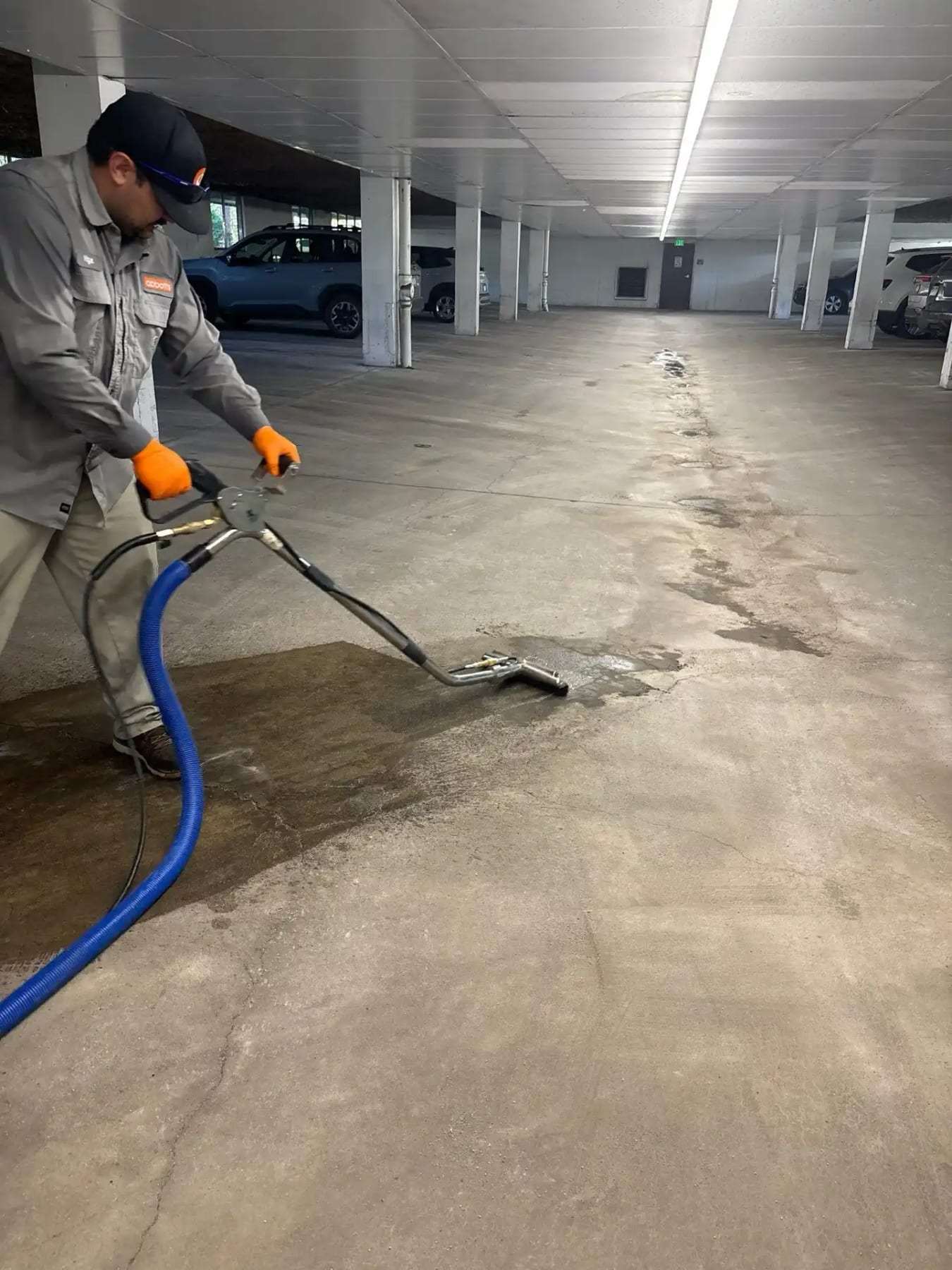
Technician extracting water from the floor of a parking garage. Illustrative only: this photo is not from a job tied to this site or a specific address.
Why this order
Each step depends on the one before. Cleaning carpet over a leak that has not been fixed means it will get wet and smell again. Treating with ozone before cleaning means the residue that produced the smell is still there. Replacing the cabin filter before cleaning means it fills with dust from the cleaning itself.
Drying is the step most often rushed. Wet foam and padding sealed back under carpet or seat covers will sour within days.
Planning it on the work order
Write the intake finding
Note the odor type and location from intake.
Flag mechanical items first
Leaks and fluid issues go to the shop before detail.
Schedule drying time
Block hours or overnight for drying, not just labor time.
Assign the recheck
Name who does the final closed-cabin check.
Who owns each step
Assign each step to a person or team: service for leaks and mechanical items, detail for cleaning and extraction, and a separate person for the final recheck. When one person does everything, steps get skipped when the lot is busy. A simple checklist that moves with the vehicle keeps the sequence on track. A short sequence card taped inside the detail bay keeps everyone working in the same order, even on busy days.
Common questions
How long does the full sequence take?
Light cases may take a day; heavy smoke or water cases often take several days because of drying and recheck time.
Can drying happen overnight?
Yes, overnight drying with fans and doors open is common and fits well between shifts.
What if the dealer is under time pressure?
Skipping drying or the leak repair usually costs more when the car comes back. Rotate another unit to the front line instead.
Where does detailing chemistry fit?
Cleaners are chosen at step four based on the material and the residue found at intake.
General information for Arvada, not a quote or professional advice. In an emergency, call 911.